Stress Spender: Why You Swipe When Life Feels Heavy And How To Break The Cycle
Picture this.
You are staring at your to do list, your inbox, your calendar, and maybe your bank account, and all you can think is, “This is too much.” Your chest feels tight. Your brain feels loud. Your shoulders are somewhere up by your ears.
You pick up your phone “just to take a break.”
Five minutes later, you are scrolling sales, food apps, or vacation rentals you definitely are not booking, but definitely are adding to cart. You tell yourself, “I just need something to look forward to.” You order. You buy. You check out.
For a moment, your brain gets quiet. You feel a little hit of relief.
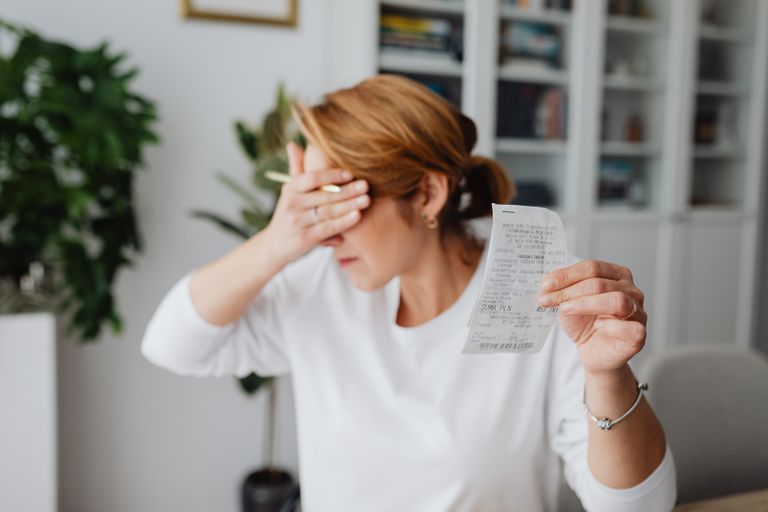
Then the package shows up, or the charge hits your account, and along with it comes an extra dose of stress. “Why did I do that when I am already worried about money”
That is the Stress Spender in action.
The moment your Stress Spender takes over
Your Stress Spender does not show up on your best days. She appears when life feels like too much.
It might be work pressure. A big life change. Family drama. Bills stacking up. A schedule that will not let you breathe. You feel out of control in one area, so your brain reaches for something it can control: spending.
Spending becomes your pressure valve. You cannot fix everything on your plate, but you can click “order.” You cannot make the hard thing disappear, but you can make a coffee, a dress, or a Target haul appear.
In that moment, the purchase is not really about the item. It is about trying to soften the feeling of being overwhelmed, trapped, or behind.
You are not trying to be reckless. You are trying to cope.
Why stress spending works… for about five minutes
When you are stressed, your brain is in survival mode. It is scanning for threats and craving anything that feels safe, soothing, or rewarding. Shopping can hit all three at once.
First, it gives you a quick distraction. Instead of staring at the problem, you are staring at products. Your nervous system gets a tiny break.
Second, it gives you a sense of control. You cannot control your boss, your bills, or your family, but you can control what you put in your cart. That feels powerful when everything else feels shaky.
Third, it gives you something to anticipate. A package on the way. A takeout order coming. A small future moment that feels easier than what you are in right now.
So yes, for a few minutes or hours, stress spending works. You feel calmer. You feel numbed out. You feel like you did something.
The catch is that the stress you were trying to escape usually is still there… plus now you have added money stress on top.
How stress spending keeps the anxiety loop going
Zoom out and look at what happens over time.
You feel stressed.
You spend to cope.
You feel temporary relief.
The bill comes.
You feel even more stressed.
You might start avoiding your bank app or your statements because you already know the number will make your stomach drop. You tell yourself, “I will look at it later, when things calm down.” But “later” never really arrives, because life keeps lifing.
In the meantime, you might notice:
- You are not sure where your money is going, just that it is going fast
- You feel guilty or embarrassed about your spending, which makes you want to avoid it more
- You tell yourself you will stop stress spending, then have a hard day and repeat the exact same pattern
- Your long term goals, like saving, paying off debt, or feeling stable, always feel out of reach
This is not a sign you lack discipline or that you are hopeless with money. It is a sign that your money has been carrying the weight of your stress that it was never designed to hold.
The good news is that you do not have to stop feeling stressed to change this pattern. You just need new ways to respond when stress shows up.
A different scene for your next stressful day
Imagine one of those days where everything feels stacked against you.
You feel the familiar urge: “I need to buy something or I will scream.”
Instead of going straight to the app or website, you give yourself a tiny pause. Not a whole therapy session. Just a small, honest check in.
You ask, “On a scale of 1 to 10, how stressed am I right now”
If you are at a 7, 8, 9, or full on 10, you label it. “Okay, this is stress brain talking.”
You tell yourself, “Right now I do not make money decisions. Right now I help my nervous system calm down first.”
You are not saying you can never buy anything when you are stressed. You are saying that when your stress is high, your spending needs to wait its turn.
This one awareness shift lets you step out of autopilot and back into choice.
Giving your stress other ways out
Your Stress Spender is not the enemy. She is the part of you waving her arms, saying, “I cannot keep doing this like this.”
So you give her more options.
On a calm day, you make a list of quick things that actually help your body and mind decompress, even a little. It might look like:
- Taking a walk around the block and getting some air
- Putting your phone in another room for 10 minutes
- Doing a few deep breaths with your eyes closed
- Stretching or moving your body for a few minutes
- Sitting in the car in silence before going inside
- Texting a trusted friend and being honest: “Today was a lot”
The trick is to pick things that are simple enough that even stressed out you could do them.
Then, the next time the stress spike hits and you want to spend, you try a new script:
“I am at a 9 right now. I will pick one thing from my list and do that first. If I still want to buy something after, I can decide then.”
Sometimes, after your walk, your breath, or your vent session, the urge to spend will be much lower. Sometimes it will still be there, but now you are deciding from a slightly calmer place instead of from pure panic.
Letting your money back into the conversation
One of the hardest parts of being a Stress Spender is how easy it is to avoid your money entirely. Looking at it feels like adding more weight to a pile that is already too heavy.
But money you do not look at quietly runs the show in the background.
So you give yourself one small, very doable practice: a weekly “money check in” that lasts 10 minutes.
You pick a day. You set a timer. You make it as gentle as possible. Snacks, music, cozy blanket, whatever helps. Your only job is to open your accounts and look, without judgment.
You are not fixing everything in those 10 minutes. You are just telling your brain, “We can look at this. We can handle seeing reality.”
Over time, this routine does a few things.
It makes your money feel less scary, because it is no longer a mystery.
It helps you catch stress spending patterns earlier, instead of three months later.
It slowly shifts your identity from “I avoid money when I am stressed” to “I can be stressed and still be a grown woman about my money.”
That identity shift matters more than any one perfect budget.
Putting bumpers around stress spending
You do not have to ban yourself from ever making a comfort purchase again. You just need some boundaries that protect you when you feel most vulnerable.
You might decide that when your stress is above a certain level, you do not buy non essentials for 24 hours. You can add things to a list or cart, but you do not check out.
You might set a “comfort spending” limit each month. A set amount of money that is allowed to go toward things that make life feel a bit softer when it is hard. Once that amount is used, you know it is time to lean on your non money coping tools instead.
You might choose one trusted person you can text before big purchases when you know you are stressed. Not so they can control you, but so you are not alone in the decision.
Think of these boundaries like handrails on a staircase. They do not change the stairs, but they give you something to hold onto when you are tired, rushed, or off balance.
You are not “bad with stress,” you are overloaded
Being a Stress Spender does not mean you are weak. It means you have been carrying a lot, often for a long time, and you were never shown better tools than “numb out and swipe.”
Your stress is not the problem. The problem is that your money has been asked to hold all of it.
When you learn to notice your stress early, give it other ways out, and add a few simple boundaries around when and how you spend in those moments, you do not become a different person. You become a more supported version of you.
You will still have hard days. You will still feel the pull to soothe yourself. But you will start to recognize the difference between “I actually need this” and “I am trying to buy my way out of a feeling.”
That awareness is where your power comes back.
Ready to see your full money personality
If this Stress Spender story feels a little too real, that is a sign your stress has been holding the wallet. You might also recognize yourself in the Impulsive Buyer, Emotional Spender, Bargain Hunter, or Strategic Planner.
If you are ready to stop guessing and start getting specific, here is your next step.
1. Take the Spending Personality Quiz
In just a few minutes, you will:
- Find your dominant spending personality
- See how it is helping and hurting your money
- Get a simple next step to start shifting things in 2026
👉 [Take the Spending Personality Quiz]
2. Explore the other money personalities
If you want to keep going, you can meet the rest of your money cast here:
- Impulsive Buyer: [Read the Impulsive Buyer guide]
- Emotional Spender: [Read the Emotional Spender guide]
- Bargain Hunter: [Read the Bargain Hunter guide]
- Strategic Planner: [Read the Strategic Planner guide]
You are not starting from failure. You are starting from awareness. Once you can see your Stress Spender clearly, you are already on your way to becoming the version of you who can feel the pressure, hold the feelings, and still make money decisions that support your peace.