The Online Shopping Trap: How Amazon, Klarna, and Late Night Scrolls Drain Your Bank Account
It starts simple.
You sit down after a long day, open your phone “just to scroll,” and before you know it there is a new Amazon order, a “buy now, pay later” plan, and a package on the way that you barely remember buying.
Each purchase feels small and reasonable in the moment. A dress on sale. A toy for the kids. A cute water bottle. A helpful gadget.
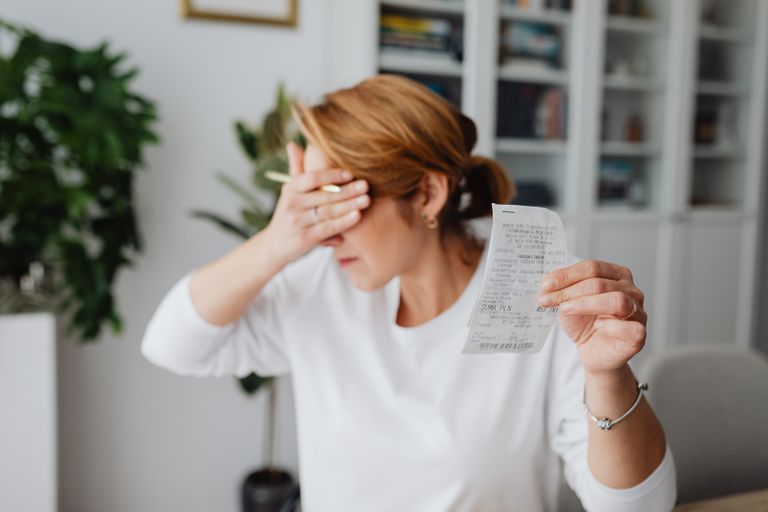
Then your card statement or bank balance updates and you think:
“How did it get this high again?”
If you are wondering how to stop online shopping from quietly draining your money, this is for you.
We are going to walk through why online shopping feels so harmless, how buy now pay later tools can pile up, what is really going on emotionally when you scroll and spend, and what you can do to get back in control without banning all fun.
No shame. Just honest insight and simple next steps.
Why Online Shopping Feels So Easy And “Not Real”
Buying in a store feels physical. You hold items. You stand in a line. You take out your card. Your brain feels more of the “sting” of spending.
Buying online feels distant. You tap a button at home and a box shows up later. That distance is not an accident. It is part of how online shopping is designed.
One click checkout and saved cards remove friction. You do not have to grab your wallet or type in card numbers. You go from “That is cute” to “Order placed” in seconds. It becomes a reflex instead of a clear decision.
Online stores are also always open. Your favorite apps and sites are there late at night, early in the morning, and in every tired moment in between. Many impulse orders happen when you are worn out, bored, stressed, or lonely. That is exactly when your emotional brain is louder than your logical brain.
On top of that, the cart is “invisible money.” In a store, a full cart feels like a lot. Online, your cart is a tidy list. It is very easy to add one more thing, lose track of totals, and ignore shipping and tax until the very end. The whole thing can start to feel like a game instead of a real financial choice.
How Buy Now Pay Later Quietly Grows Your Debt
Klarna, Afterpay, Affirm, and similar buy now pay later tools are everywhere. The message is usually something like “Split this into four easy payments.”
It feels like less pressure, more flexibility, and a way to afford things without “real” debt.
In reality, buy now pay later is still debt. It is money you are promising to pay in the future.
One forty dollar purchase split into four payments might feel harmless. The problem comes when you stack several of these plans at once, on top of your regular bills and credit card charges.
Suddenly you have lots of small payments due on different days. Your monthly commitments are higher than you realize. You keep feeling like you should have more money left, but you do not.
If you often need to split small wants into payment plans, it is usually a sign that the item does not fit in your current budget or that your overall spending is not lined up with your income. Buy now pay later tools make it easier to ignore that truth.
Learning how to stop online shopping is not just about saying no to orders. It is also about noticing when you are using payment plans to hide the real cost.
The Emotional Side Of Late Night Online Shopping
Online shopping is not only about convenience. It is also about feelings, identity, and how you see yourself.
Many people use online shopping to cope with emotions. Late night orders often come from needing a break, a distraction, or something to look forward to. That is especially true if you spend most of your day taking care of others, feel unappreciated, or rarely do anything just for yourself. The package becomes a little hit of “I matter too.”
Social media also adds pressure. You see styled homes, matching outfits, seasonal decor, and endless “favorites” and “must haves.” The quiet message is that if you had these things, your life would look better and feel better. Clicking “buy” is not just about the object. It is about chasing the feeling of being that kind of put together person.
Sometimes online shopping is also a way to avoid harder feelings like anxiety, resentment, disappointment, or grief. Shopping can cover those feelings for a moment, but it does not heal them. When the box is opened and the feeling returns, it is easy to repeat the cycle.
None of this makes you weak or shallow. It makes you human.
How Online Shopping Breaks Your Budget Without You Noticing
You might not be doing giant “haul” orders. Often, the damage happens in small, repetitive purchases.
You spend 18 dollars here, 32 dollars there, 12 dollars on something for the kids, 27 dollars on skincare, 22 dollars on a random deal you did not plan. Each one is easy to justify as “only twenty bucks.”
Twenty dollars repeated ten times is two hundred dollars. Over a year, that is 2,400 dollars that could have gone to debt, savings, travel, or simple breathing room.
Online shopping can also lead to double spending. You buy replacements for things you lost under clutter. You order items you already had but forgot. You buy organizers to manage all the things you bought. You end up spending more to manage your past spending.
If you often say, “There is no money for savings,” or “We can never get ahead,” but there are packages arriving regularly, online shopping may be part of the reason your goals feel stuck.
Step 1: Get Honest About How Much You Spend Online
To figure out how to stop online shopping, you first need to know what it is really costing you.
Pick the last one to three months. Pull your bank and credit card statements. Highlight every online retailer or app purchase. That might include Amazon, Target, clothing sites, beauty and skincare sites, and buy now pay later payments.
Add them up for each month and write it down:
“Last month I spent ___ dollars on online shopping.”
Then add up the buy now pay later payments:
“My BNPL payments last month totaled ___ dollars.”
Seeing that number might feel uncomfortable. It can also feel empowering, because now you have a clear starting point.
Step 2: Give Online Shopping A Real Budget
Telling yourself “I just need to stop” usually does not work. Instead, give online shopping a defined place in your budget.
Ask yourself how much you can realistically spend online each month without hurting your priorities. That might be 50 dollars, 100 dollars, or another number that fits your income and goals.
Then track every online order and subtract it from that amount. When it is gone, you are done for the month unless you move money over on purpose.
You are not banning online shopping. You are turning it into a choice instead of a leak.
Step 3: Add Friction So Every Purchase Is A Choice
Right now, your online shopping might be very easy. You can make it just a little harder without cutting it out completely.
Here are practical ways to slow yourself down:
- Remove saved cards from Amazon and other shopping sites
- Turn off one click ordering and log out after each purchase
You can also move shopping apps off your main home screen and turn off push notifications for sales and “low stock” alerts.
Each extra step creates a tiny pause where you can ask, “Do I really want this, or am I just in a mood?”
That pause is one of the most helpful tools for anyone learning how to stop online shopping.
Step 4: Use A 24 Hour Rule For Non Essential Buys
Impulse is the real problem, not every purchase itself.
A simple rule that helps many people is this: if it is not a true need, wait 24 hours before you check out.
You can add items to your cart or wish list, then walk away. Come back the next day and decide with a clearer mind.
Often, you will realize some items no longer matter. You may remove a few and keep one. You may notice that you were trying to fix a feeling, not a true need.
If you are tempted to rush because “the sale might end,” ask yourself if your life will truly be worse if that happens. Most of the time, the honest answer is no.
Step 5: Do An Emotional Check In Before You Click
Before you buy, take a short pause and ask three simple questions:
What am I feeling right now?
What do I hope this purchase will fix or change?
Is there another way I could meet that need that does not involve spending?
You might notice that you are really just exhausted and need to lie down for ten minutes. You might realize you are craving a reward and could make a favorite drink or watch a show instead. You might see that you are avoiding a task and that starting it for five minutes would feel better than buying something new.
You are not saying you can never buy things. You are saying you want your purchases to be based on clear choices, not just whatever feeling happens to be loudest.
Step 6: Make Buy Now Pay Later A Rare Tool
If buy now pay later is adding stress to your life, you can set some boundaries around it.
You might decide you will not use BNPL for clothes, decor, or non essential items. You might limit yourself to one active BNPL plan at a time, or choose to pause it completely for a while.
A simple guideline is, “If I cannot pay for this in full this month without strain, I will not buy it right now.”
This rule forces your income and your lifestyle to line up more honestly.
Step 7: Keep A “Want List” Instead Of Buying Immediately
You are allowed to want things. You do not have to buy every want in the moment.
Create a simple “want list” in your phone, planner, or budget. When something tempts you, add it to the list with the price.
Later, you can look over the list and see what still matters. You might decide to plan for one or two of those items each month within your budget. Many items will fall off the list on their own once the feeling passes.
This approach helps you see patterns in what you want and teaches you to choose your favorites instead of buying everything that crosses your screen.
Step 8: Celebrate Progress, Not Perfection
You will still have impulse buys sometimes. You will still have months that are not ideal. That does not mean you failed.
Progress looks like fewer unplanned orders, smaller totals over time, more awareness before you click, and less shame afterward.
When you make a different choice, notice it. You can tell yourself, “I closed the app instead of ordering,” or “I waited and decided I did not really want it,” or “I stayed within my online shopping budget this month.”
The more you see and celebrate these wins, the more your brain learns, “We handle online shopping differently now.”
Final Thoughts: You Do Not Have To Fear Your Phone
Online shopping is not going away. Amazon, apps, and buy now pay later are part of modern life.
You do not have to become a person who never shops or never treats herself. You simply need to understand how the system pulls you in, give yourself some protection, and make sure your money is serving your real values and goals.
If you get honest about your online spending, give it a clear budget, add a little friction, delay your purchases, and check in with your emotions, you can enjoy the convenience without constantly asking, “Where did all my money go?”
You are not bad with money because you have fallen into the online shopping trap. You live in a world that makes that trap very easy.
You are already stepping out of it by paying attention. The rest is just one thoughtful choice at a time.